Email for more info: info@mspeptidesolutions.com
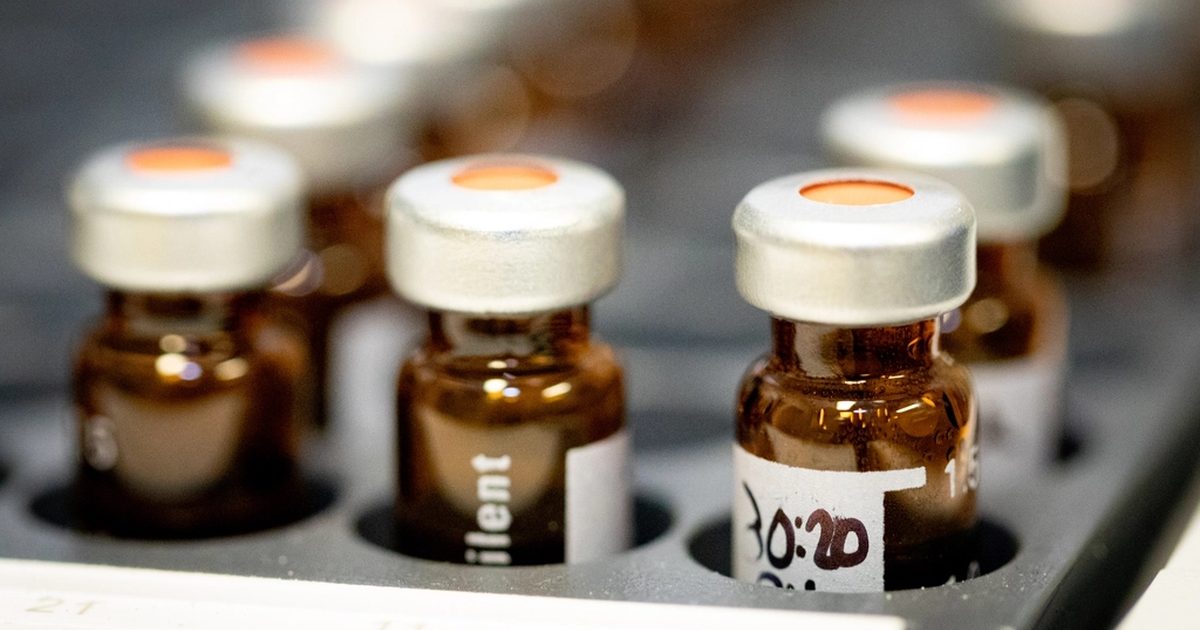

Freeze dried peptides need the vial at room temperature, clean stoppers, and water run down the inside wall so the powder dissolves without shaking. This guide covers each step, the choice between bacteriostatic and sterile water, and how to store the vial once it is mixed.
How to Reconstitute Lyophilized Peptides: A Step-by-Step Lab Guide
A vial of freeze dried peptide looks tougher than it is. The white cake sitting at the bottom will survive shipping at room temperature without much trouble. But the moment you add liquid, a clock starts running, and the way you add that liquid decides whether the material stays good or quietly loses strength before you measure anything.
The short version: let the vial come to room temperature, wipe both stoppers with an alcohol swab, draw your water into a syringe, and push it slowly down the inside wall of the vial so it runs onto the powder instead of hitting it head on. Then leave it alone. Do not shake it. Most peptides dissolve by themselves within a few minutes.
The rest of this covers the places people usually go wrong.
What lyophilized actually means
Lyophilization is freeze drying. The peptide gets frozen, then put under vacuum so the ice turns straight from solid to vapor without ever melting. What is left is a dry, spongy cake with almost no water in it.

This matters because water is what breaks most peptides down. Peptide bonds slowly come apart in water, and heat, light and pH changes all speed that up. Take the water away and the chemistry mostly stops. That is why dry vials can ship without cold packs, and mixed vials cannot.
Worth knowing: the cake can be very hard to see. Five milligrams of peptide spread across the bottom of a vial may look like nothing more than a thin film, and it sometimes gets knocked up onto the stopper in transit. Before you decide a vial arrived empty, tap it firmly on a hard surface and hold it up to the light at an angle.
What you need before you start
- The freeze dried vial, at room temperature
- Your liquid, usually bacteriostatic water or sterile water
- A syringe fine enough to measure the volume you want accurately
- Alcohol swabs for both stoppers
- A clean, steady work surface out of direct light
If you are setting up from scratch, the starter kit puts the basics together in one box, and the rest of the lab supplies cover replacements as you work through them.
Bacteriostatic water vs sterile water
These two look identical in the vial. They are not the same thing, and picking the wrong one is probably the most common mistake in this whole process.
Sterile water is just water that has been sterilized. Nothing is added to it. There is no preservative, so once you put a needle through the stopper there is nothing stopping bacteria from growing in it. Treat it as single use. Mix your vial, use it in that session, then throw it out.
Bacteriostatic water is sterile water with about 0.9% benzyl alcohol added. The benzyl alcohol holds bacterial growth back, which is what lets you go into the same vial again over several days. Kept in the fridge, a vial mixed with bacteriostatic water is generally treated as good for roughly 28 days.
So the rule is simple. If you are going into the vial more than once, use bacteriostatic water. If the whole vial gets used in one sitting, sterile water will do. Both come in 3 ml and 10 ml sizes: bacteriostatic 3 ml and 10 ml, or sterile 3 ml and 10 ml.
There is one exception. A few peptides do not sit well with benzyl alcohol, or with the small pH shift it brings. If a protocol specifically calls for sterile water or a particular buffer, follow the protocol instead of the general rule.
Step by step
1. Let the vial warm up
If the vial has been in the fridge or freezer, leave it out until it no longer feels cold, usually twenty to thirty minutes. Adding liquid to a cold vial causes condensation and puts stress on the material for no good reason. Do not try to speed this up with warm water or any heat source.
2. Wipe both stoppers
Swab the rubber stopper on the peptide vial and on the water vial, then let both air dry. Wiping them dry with a cloth defeats the point. People skip this step constantly, and it is the most common way a vial gets contaminated.
3. Work out your volume first
Decide how much water you are adding before you draw it up, because that number sets the strength of everything afterward. The math is easy:
Concentration (mg/ml) = peptide in the vial (mg) ÷ water added (ml)
A 10 mg vial with 2 ml of water gives you 5 mg/ml. The same vial with 1 ml gives you 10 mg/ml. Neither is more correct than the other. A weaker solution is easier to measure in small amounts, while a stronger one takes up less space. Pick based on the smallest amount you need to measure reliably.

Write the strength and the date on the vial label as soon as you are done. A week later, mixed vials all look the same.
4. Add the water down the side
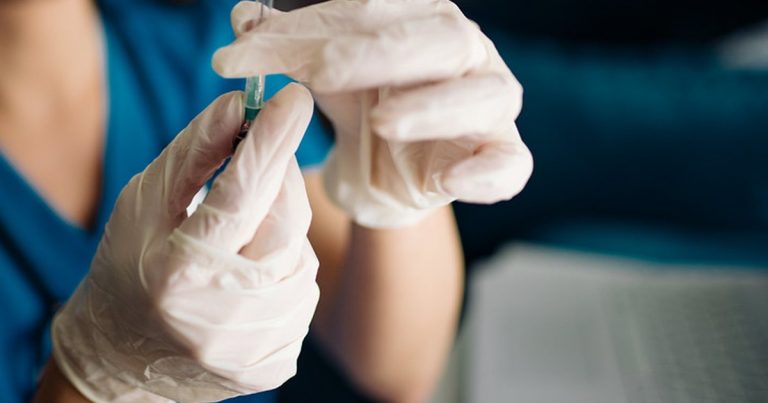
Draw up your measured volume, put the needle through the stopper, and tilt it so the stream runs down the inside wall of the vial and pools onto the cake from the side. Press the plunger slowly. Give it a few seconds rather than a fraction of one.
Firing water straight into the powder is the error I see described most often. The force of the jet can tear peptide chains and whip up foam in the spot where it lands, and foam means damaged material sitting at the surface. Going slow and angled costs you nothing and avoids the whole problem.
The vial is usually under a slight vacuum, so it will often pull the liquid in on its own once the needle is through. Let it.
5. Let it dissolve, and do not shake it
Shaking makes foam and puts stress on the peptide, and both of those damage it. If the powder has not gone after a minute or two, roll the vial gently between your palms or swirl it slowly. Some peptides take several minutes. That is normal and does not mean the vial is faulty.
6. Look at the solution
A properly mixed vial should be clear and colorless, with nothing floating in it and no lasting cloudiness. Check it against a light background and a dark one.
Cloudiness that will not clear, bits floating in the liquid, or any change in color are all reasons to stop and throw the vial out rather than carry on. A thin ring of foam right after mixing is different, and it usually settles within a few minutes.
Storing peptides after mixing
Once a peptide is in solution, how you store it changes completely.
- Keep it in the fridge at 2 to 8 °C. At room temperature you are counting hours, not days.
- Keep it dark. Store it in the original box or something that blocks light, since several peptides are sensitive to it.
- Stay out of the fridge door. Repeated warming and cooling from opening the door does more harm than a slightly warmer but steady shelf.
- Do not casually freeze a mixed vial. Freezing and thawing repeatedly is one of the fastest ways to lose strength. If you genuinely need to freeze it, split it into single use portions first so nothing gets thawed twice.
- Label everything with the compound, the strength and the date you mixed it.
Unopened dry vials are far more forgiving. Kept cool, dry and dark, they hold up for a long time. That is a good argument for only mixing what you are actually working with and leaving the rest sealed.
Five mistakes that waste material
- Shaking the vial to make it dissolve faster. It does the opposite of helping.
- Firing the water straight into the cake instead of down the wall.
- Mixing a cold vial, which gives you condensation and stress for no benefit.
- Using sterile water in a vial you plan to go into more than once.
- Not labeling. An unlabeled mixed vial is scrap, because you can no longer trust its strength or its age.
Common questions
How long does a reconstituted peptide last?
Mixed with bacteriostatic water, kept in the fridge at 2 to 8 °C and out of the light, a vial is usually treated as good for around 28 days. With sterile water, treat it as single session. Stability does vary between compounds, so a specific protocol always beats a general number.
Can I use tap water or distilled water?
Neither one is sterile, and distilled water is not the same thing as sterile water for injection, so use water made for the purpose.
What if the powder will not dissolve?
Give it more time and keep swirling gently before you decide anything is wrong, because some compounds are simply slow. If you can still see undissolved material after about ten minutes of patient handling, stop and check the documentation for that compound. A small number need a different solvent or a buffer rather than water.
Does adding more water change how much peptide I have?
The amount in the vial is fixed, so the water changes only the strength, meaning how much peptide sits in each milliliter. The total stays the same.
Is it normal for the vial to suck the water in?
That is expected, because these vials are sealed under vacuum or inert gas, so the vial pulls liquid in through the needle. It is also a reasonable sign the seal was still intact.
TL;DR
Most of this comes down to patience rather than skill. Room temperature, clean stoppers, water down the wall, no shaking, straight into the fridge, and a label on the vial. Do that and the material you measure out later is the material you actually paid for.
Everything we supply is lab tested for purity and identity, and sold as research grade material for laboratory and research use. You can browse by GLP-1 and weight management, healing and recovery, or see everything in the shop. If something you need is not listed, email us at info@mspeptidesolutions.com and we will try to source it.