Email for more info: info@mspeptidesolutions.com


Two vials can look identical and contain completely different things, so this covers what a real certificate of analysis shows, how mass spectrometry and HPLC answer different questions, the red flags worth acting on, and where the law actually sits on buying research peptides online.
How to Tell If Peptides Are Legit: Reading a Certificate of Analysis
Two vials can look identical, carry the same label and cost the same, and contain completely different things. Independent testing of material bought online has repeatedly turned up vials holding less peptide than stated, the wrong sequence entirely, or measurable synthesis leftovers.
There is no way to tell by looking. What separates verified material from a guess is documentation you can check.
The certificate of analysis is the whole answer
A COA is a lab report for one specific batch. It answers the only two questions that matter about what is in a vial: is this the right molecule, and how much of the contents is actually that molecule.
Those come from two different tests, and a real COA shows both.
- Mass spectrometry confirms identity. Every peptide sequence has a calculated molecular weight. The instrument measures what is actually present, and the two figures should match closely. This is what catches the wrong compound.
- HPLC measures purity. The sample is separated into its components and the main peak is expressed as a percentage of the total. Research grade material is generally reported at 98% or higher.
A purity number on its own means nothing without identity, because you can have a 99% pure sample of entirely the wrong molecule. Our guide to reading a COA walks through an actual report line by line.
What a real COA has on it
- The batch or lot number has to match the number on the vial you received, because a certificate that does not tie to your specific batch is decoration.
- The date matters, since testing is a snapshot of one production run rather than a standing guarantee.
- The laboratory that ran it should be named, and third party testing means a lab that did not make the material.
- The actual chromatogram and mass spec trace should be attached rather than a summary table, because the traces are the part you cannot fake with a text editor.
- The method should be stated, so that a purity figure has some context.
The red flags
Most of these are about what is missing rather than what is claimed.
- There is no certificate at all, or one appears only on request and then takes a long time to arrive.
- A single certificate covers the entire catalog, which is not testing, because testing happens per batch.
- The document is a summary with no traces attached, and 99% purity typed on a letterhead is a claim rather than a measurement.
- No laboratory is named, or the one named turns out to be the seller.
- Purity is quoted to a suspicious precision, like 99.98%, across every product in a range.
- The marketing describes human use, which says something about the seller’s judgment and is also the specific thing regulators act on.
What you can check when it arrives
Documentation aside, a few things are visible.
Freeze dried peptide should present as a solid cake or a dense powder, usually white. A vial that arrives with the contents scattered up the walls has been knocked about in transit, which is cosmetic rather than chemical. What matters more is that the cake dissolves cleanly. Material that stays cloudy, leaves visible particles, or refuses to go into solution is a reason to set that vial aside.
The vial should be properly sealed with an intact crimp and a stopper that has not been entered. Labels should carry the compound, the quantity and a batch number that matches the paperwork.
One thing that is not a red flag: arriving without a cold pack. Freeze dried material is stable at room temperature for a period precisely because the water has been removed, which is why it ships dry. Refrigeration matters after you mix it, as covered in storage, temperature and shelf life.
Can you legally buy peptides online?
Compounds in this category are sold as research materials for laboratory use. They are not approved medicines, and they are not sold for human consumption. That is not a formality or a wink, it is the legal basis on which the material changes hands.
What regulators act on is intent expressed through marketing. The FDA has pursued sellers whose own advertising described weight loss, dosing or other human outcomes, treating that marketing as evidence the material was intended for consumption regardless of any disclaimer on the page. The disclaimer does not survive contact with copy that contradicts it.
The compounding position is separate and currently moving. BPC-157 sits in Category 2 of the FDA’s interim 503A bulk substances list, which blocks compounding pharmacies from preparing it. On July 23, 2026 the Pharmacy Compounding Advisory Committee voted 8 to 6 to recommend adding BPC-157 and KPV to the 503A list, against the position of FDA’s own scientists. That vote is a recommendation, and the FDA decides through formal rulemaking. We cover the wider picture in the downsides of peptides.
Common questions
What makes a peptide high quality?
Confirmed identity, high purity from a stated method, batch specific documentation, and handling that keeps it stable between synthesis and arrival. Those are the properties. Everything else is branding.
What is the highest quality BPC-157?
There is no ranking anyone can defend, because quality is a property of a batch rather than a brand. The question to ask about any specific vial is whether its COA names a third party lab, carries a batch number matching the vial, and shows both a mass spec and an HPLC trace. What BPC-157 is covers the compound itself.
What is the number one selling peptide?
By search interest and volume of discussion, BPC-157 leads the repair category and the GLP-1 group leads everything overall, driven by semaglutide, tirzepatide and retatrutide. Sales figures across this market are not published, so treat any specific ranking as an estimate.
Where does Joe Rogan get his peptides?
He has discussed using BPC-157 on his podcast but has not stated publicly where he sources it. Any page claiming to know is guessing, and several are simply attaching a name to a shop.
TL;DR
Legitimacy is documented, not advertised. A real certificate of analysis is batch specific, names the third party lab, is dated, and shows both a mass spectrometry trace confirming identity and an HPLC trace measuring purity. Purity without identity is meaningless, since a sample can be 99% pure and be the wrong molecule. Reused certificates, summary tables with no traces, unnamed labs and marketing that describes human use are the signals worth acting on. Freeze dried material shipping without a cold pack is normal.
Everything we supply is lab tested for purity and identity, and sold as research grade material for laboratory and research use. Read the documentation on anything you are considering and judge it yourself. Start with how to read a COA.
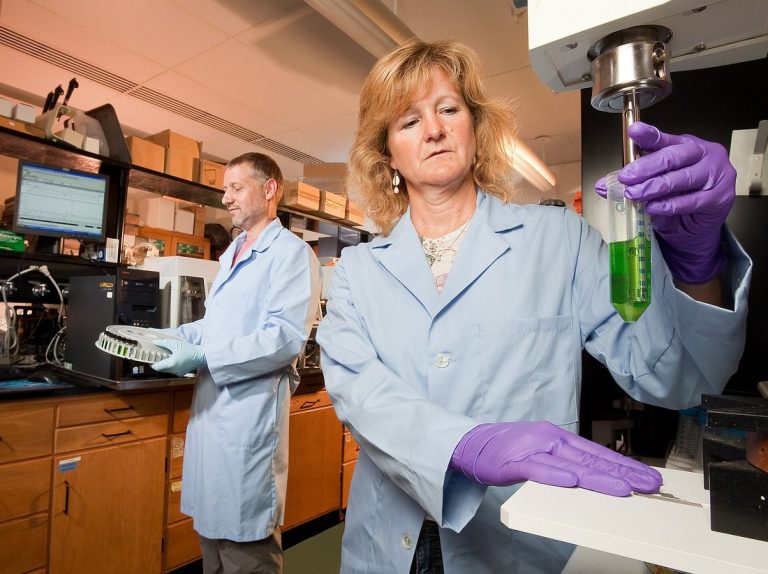
Featured image by NASA ICE, CC BY 2.0.