Email for more info: info@mspeptidesolutions.com

Rig work wears the body down through heavy loads at reach, vibration and twelve hour shifts rather than through one dramatic injury. This post explains why that schedule leaves the body no consistent window to repair itself.
Peptides and Oilfield Recovery: Why Rig Work Wears You Down
Oilfield work does something to the body that most jobs do not. It is not one dramatic injury, though those happen. It is the accumulation: heavy loads handled in awkward positions, twelve hour shifts, weeks away, and a schedule that gives the body no consistent window to repair itself.
This piece is about what the work actually does physically, and about the biology of the repair that has to happen afterward.
The numbers on this industry
Oil and gas extraction carries a fatality rate several times higher than the average across US industries. NIOSH takes it seriously enough to maintain a dedicated surveillance database for the sector, the Fatalities in Oil and Gas Extraction database, which does not exist for most kinds of work.
The largest single category of fatalities is not what people expect. It is motor vehicle crashes, driving between sites across long distances, often at the end of a shift. After that come struck-by incidents, caught-in or between equipment, falls from height, and fires and explosions.
Those are the events that get recorded. The injuries that end careers more quietly are musculoskeletal, and they do not arrive on a single day.

What the work loads
Manual handling
Tripping pipe, handling tongs and slips, moving equipment. The loads are heavy, they are often handled at arm’s length rather than close to the body, and the movement usually involves a twist. That combination, load plus reach plus rotation, is the one that puts most stress on the lumbar spine.
Repetition matters more than any single lift. A back does not usually fail on the heaviest thing you picked up. It fails on an ordinary movement after thousands of ordinary movements.
Vibration
Vibration comes in two kinds, and they are separate problems. Hand-arm vibration comes from powered tools. Sustained exposure is linked to hand-arm vibration syndrome, which affects circulation and nerves in the fingers and hands. Whole-body vibration comes through the seat of heavy equipment and vehicles, and is associated with lower back problems.
Posture and duration
Overhead work loads the shoulder. Kneeling loads the knee. Standing on steel for twelve hours loads everything below the waist. None of these is dangerous for an hour. The exposure is the shift length, repeated across a hitch.
Environment
Heat stress in summer work raises cardiovascular strain and degrades decision making before the worker notices it happening. Cold does the opposite to grip and dexterity. NIOSH has also documented respirable crystalline silica exposure at hydraulic fracturing sites, from the sand handling side of the operation.
Which structures take which load, and why the back, shoulders, knees and hands each fail differently, is broken down in joints, back and hands.
Why these tissues are slow to recover
These tissues differ enormously in how fast they repair, which explains a lot of the frustration. Muscle recovers relatively well. It has a rich blood supply, which means oxygen, nutrients and repair cells arrive quickly. A muscle strain is usually the injury that behaves the way you expect.
Tendon and ligament are different. They are poorly vascularized by comparison, so everything repair needs has further to travel and arrives more slowly. That is the main reason a tendon problem drags on for months while a muscle pull clears in weeks. It is not that the tissue is lazy. It is that the supply line is thin.
Cartilage is worse again. Articular cartilage has no blood supply at all and gets what it needs by diffusion through joint fluid. Its capacity to repair itself is limited, which is why joint surface damage is treated as a long term problem rather than something that heals and is forgotten.
So the tissues taking the most load in this work are also the ones least equipped to fix themselves quickly.
The schedule problem
Repair is not passive. It happens on a schedule, and most of it happens while you are asleep.
The largest natural growth hormone pulse of the day occurs during deep slow wave sleep, concentrated in the first part of the night. Growth hormone drives IGF-1 production, and IGF-1 does much of the tissue building work. Disrupt that sleep and you are not just tired, you have interfered with the window in which repair is actually scheduled.
Rotational schedules and night shifts do exactly that, which is why sleep on rotation gets its own article rather than a paragraph here.
Where the research sits
Given that the bottleneck for tendon and ligament is blood supply and cell migration, it is not surprising that a lot of recovery research targets exactly those steps.
- BPC-157 is studied mainly for angiogenesis, the formation of new blood vessels, through the VEGFR2 pathway. It has also been shown to increase fibroblast migration and outgrowth in tendon cell culture. Both address the supply line problem directly.
- TB-500, thymosin beta-4, regulates actin, the protein cells use to physically move. Cell migration into a damaged area is a required step in any repair.
- GHK-Cu delivers copper, the cofactor for lysyl oxidase, the enzyme that cross links collagen. Cross linking is what converts newly laid collagen into tissue with real tensile strength.
- Growth hormone secretagogues act on the pituitary rather than supplying hormone, which keeps the natural pulsing pattern intact.
Those three recovery compounds are frequently combined, and the reasoning is that each covers a different stage: blood supply arriving, cells migrating in, and matrix being built and cross linked. That is why three way blends exist.
Common questions
Why do tendon injuries take so much longer than muscle?
It comes down to blood supply. Muscle is well vascularized, so repair materials and cells arrive quickly, while tendon and ligament are not, so the same process runs far more slowly.
What is hand-arm vibration syndrome?
A condition linked to sustained use of vibrating powered tools, affecting circulation and nerve function in the fingers and hands. It develops over time rather than from a single exposure.
Why is driving the biggest fatality risk?
The work involves long distances between remote sites, and a lot of that driving happens at the end of a long shift when alertness is already degraded. It is the largest single category in the fatality data for this sector.
Does cartilage heal?
Articular cartilage has no blood supply and receives nutrients by diffusion through joint fluid. Its self repair capacity is limited, which is why joint surface damage is managed as a long term issue.
TL;DR
Oil and gas extraction has a fatality rate several times the industry average, with vehicle crashes the largest single category. The quieter damage is musculoskeletal: heavy loads handled at reach with a twist, vibration from tools and equipment, and long shifts on hard surfaces. The tissues taking that load, tendon, ligament and cartilage, are the least vascularized in the body and therefore the slowest to repair. Most of that repair is scheduled during deep sleep, which rotational work disrupts.
Everything we supply is lab tested for purity and identity, and sold as research grade material for laboratory and research use. See the healing and recovery range, or start with the reconstitution guide.
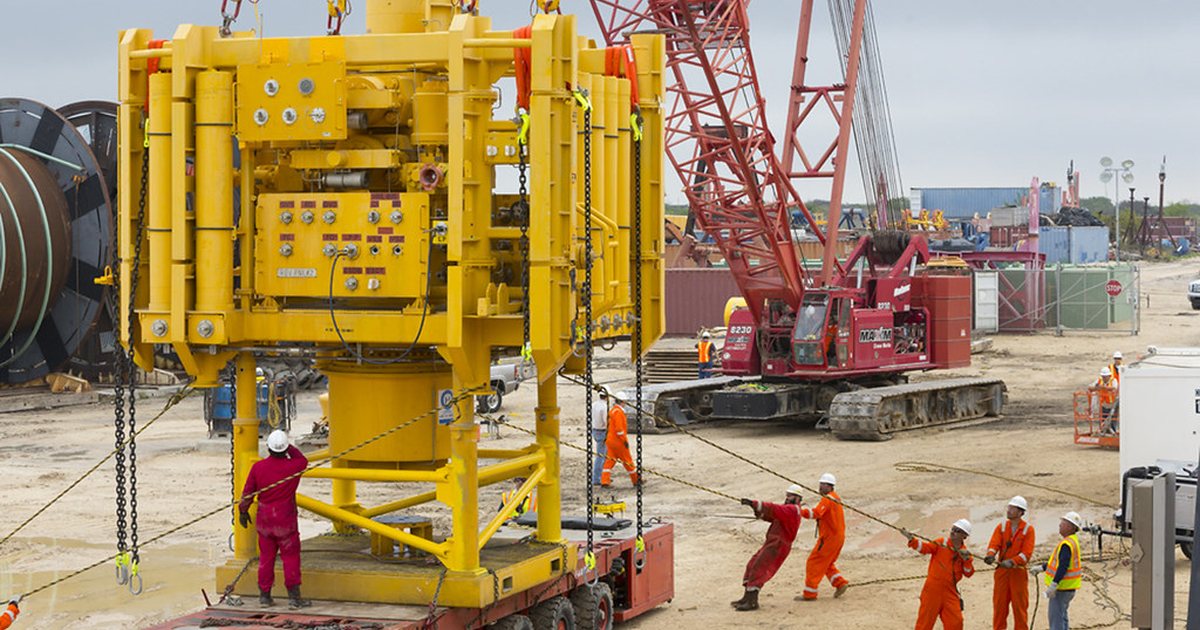
Featured image by BSEE, public domain.